A Fully Electric, Fully Solar Camp
Silent Savannah is proud to announce that Natural Habitat Adventures has purchased two solar trailers and a fully electric vehicle fleet for their high-season camp at Ol Pejeta Conservancy, Kenya.
Natural Habitat Adventures - known as Nat Hab - is one of the world's most respected nature travel companies, and the official travel partner of WWF. Their camps and expeditions operate across the globe, always with an uncompromising focus on conservation and sustainability. For Nat Hab to go fully electric and fully solar at Ol Pejeta is a statement that goes well beyond one camp.
What Nat Hab Purchased
Two solar trailers. Three electric vehicles. No generator. No grid. The entire camp operation - power and transport - runs on solar energy collected on site.
"Two solar trailers. Three electric vehicles. The entire camp operation runs on solar energy collected on site."
Ol Pejeta Conservancy
Ol Pejeta is one of the great wildlife sanctuaries of East Africa. Spanning 90,000 acres in the Laikipia region, it is the largest black rhino sanctuary on the continent and home to some of the last northern white rhinos on earth. It also carries significant populations of lion, elephant, buffalo, cheetah, and wild dog - as well as the only chimpanzee sanctuary in Kenya.
It is also a place that takes conservation seriously. Ol Pejeta has been a leader in how a private conservancy can integrate tourism, research, and conservation into a single operating model. A camp going fully solar and fully electric here is entirely consistent with the character of the place.
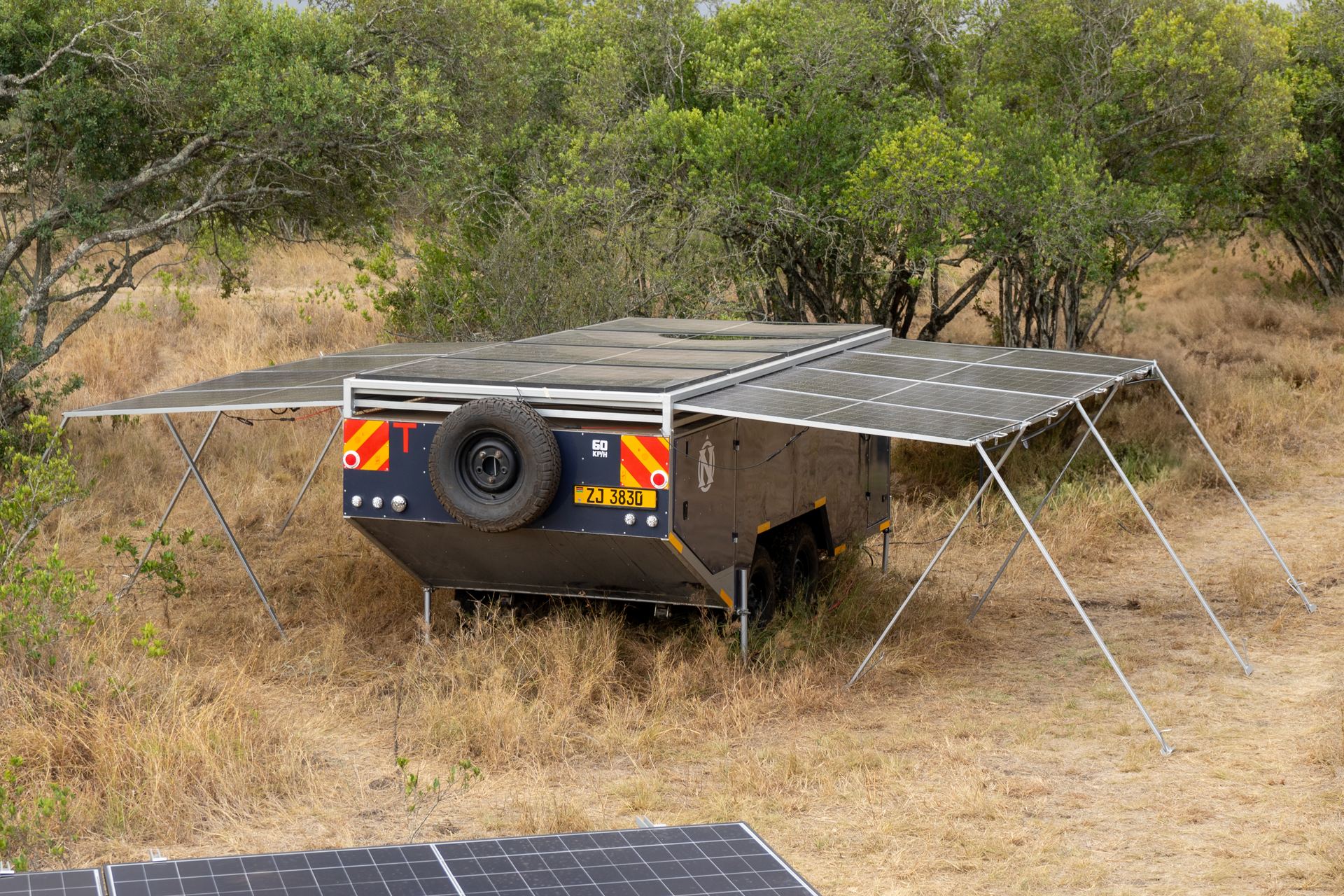
The Silent Savannah solar trailer deployed in the field - panels extended, ready to charge
How the System Works
The two solar trailers operate independently, each dedicated to a different part of the camp's energy needs.
The first trailer supplies power for the camp itself - lighting, equipment, and the electric support vehicle used for logistics and operations. The second trailer is dedicated to the game drive fleet, providing all the charging required to keep two electric game viewers operational through a full high-season day.
Both trailers deploy in under five minutes. When the camp moves or repositions for the season, the trailers move with it. There is no fixed infrastructure to install. No generator fuel to arrange. No grid to connect to. The camp arrives, the trailers deploy, and the system is running.
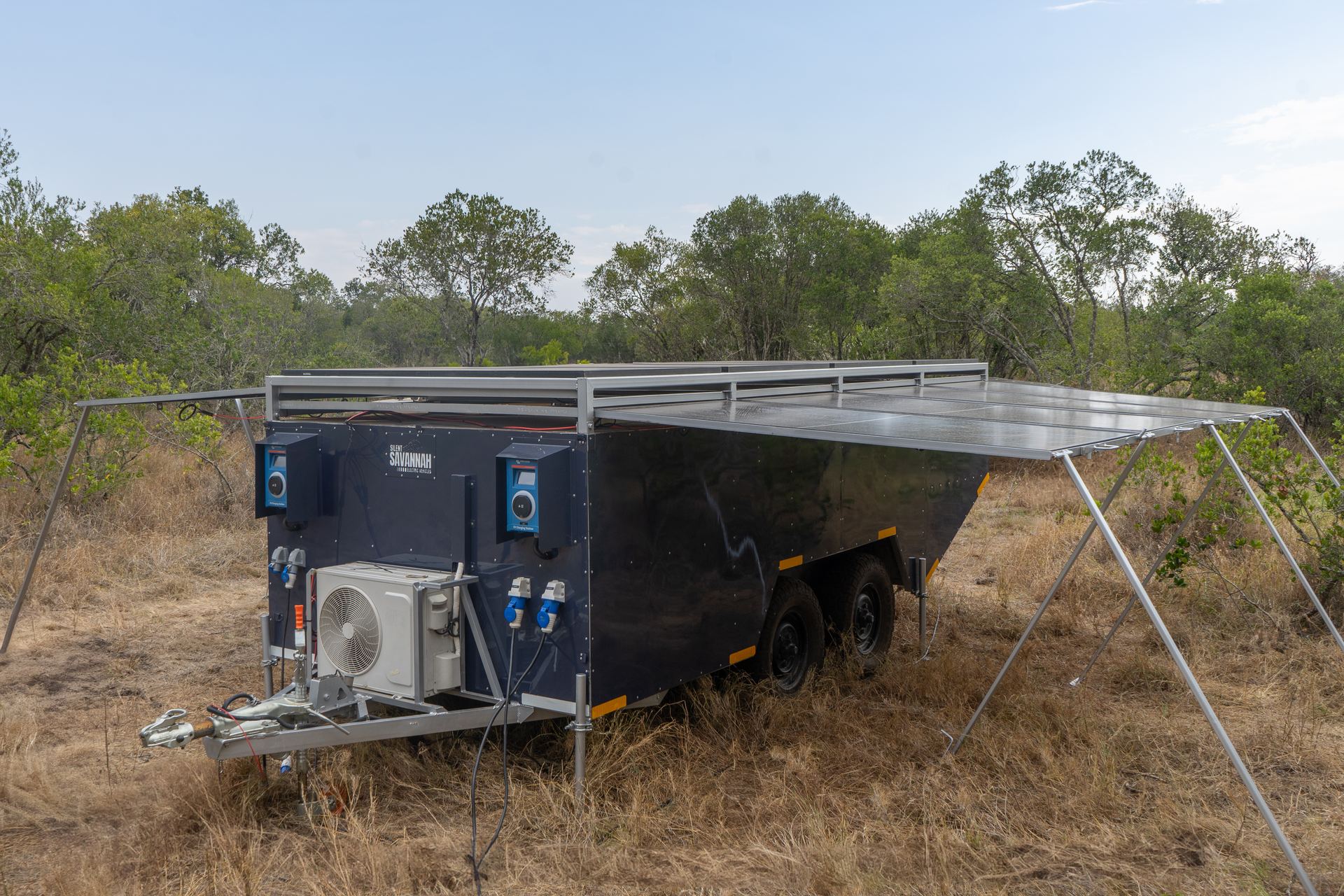
Inside the trailer: Victron MultiPlus inverter system and integrated battery storage
The Electric Game Viewers
The two electric game viewing vehicles are built on the same platform Silent Savannah has proven across Kenya - engineered for the terrain, capable in 4WD, and silent on approach. In a conservancy like Ol Pejeta, where guests may be within metres of rhino, wild dog, or lion, the absence of engine noise is not a luxury. It changes the quality of the encounter.
The electric support vehicle handles everything else the camp needs on the ground - logistics runs, equipment transport, and backup. The full fleet is zero-emissions.
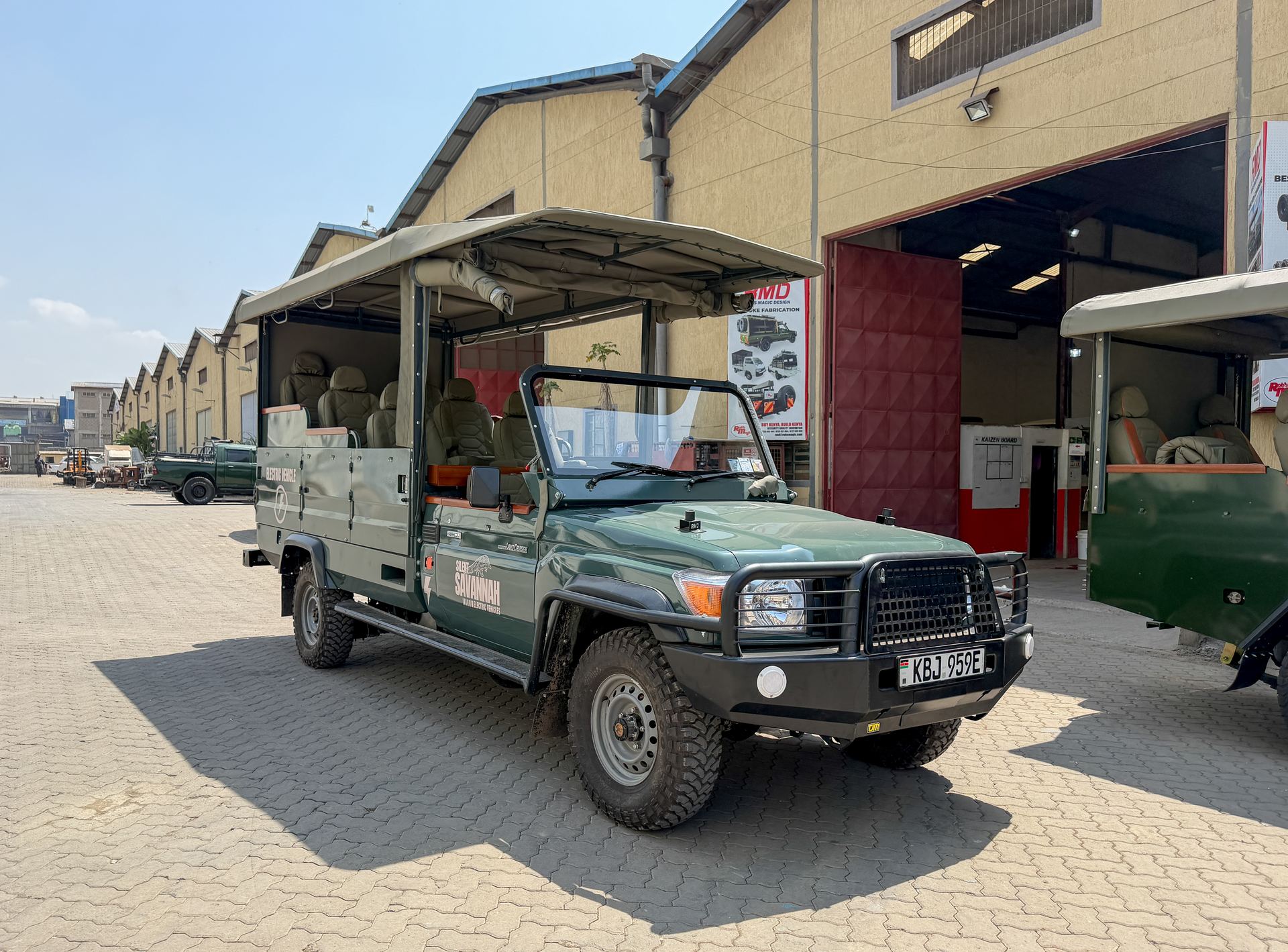
One of the electric game viewing vehicles headed to Nat Hab's Ol Pejeta camp
Why This Matters
Natural Habitat Adventures operates with WWF as their partner. Sustainability is not a marketing position for them - it is how they are built. Their decision to purchase, not lease, and to go fully solar and fully electric across the whole camp operation reflects exactly that.
For the safari industry, it sends a clear signal. A world-class operator, in one of East Africa's premier conservancies, running the entire camp and fleet on solar. Not as a pilot. Not as one vehicle in a diesel fleet. As the complete operation.
The question other operators are asking - whether this model actually works in the field - has an answer now. It does.